FROM THE ALABAMA LAWYER: Transatlantic Tariffs – A European Customs Perspective on Trade Measures Between the U.S. and the EU

 By Bernd J. Fehn, Karsten Fehn, Markus Bitzer* This article outlines recent developments in customs and tariff policies between the European Union (“EU”) and the United States, highlighting the legal…

Continue ReadingFROM THE ALABAMA LAWYER: Transatlantic Tariffs – A European Customs Perspective on Trade Measures Between the U.S. and the EU

FROM THE ALABAMA LAWYER: Duties of a Nation – The Legal and Economic Life of American Tariffs

By John Howard When Americans think of tariffs today, they often picture trade wars, pricey foreign goods, political brinkmanship, or enigmatic World Trade Organization (“WTO”) disputes. But for most of…

Continue ReadingFROM THE ALABAMA LAWYER: Duties of a Nation – The Legal and Economic Life of American Tariffs

FROM THE ALABAMA LAWYER: Pig Butchering – The International Cryptocurrency Scam Costing Americans Billions

By Keith Jackson, Riley & Jackson, P.C. The confluence of seemingly disparate events in 2020 marked the onset of a new era in international cybercrime, particularly involving cryptocurrency. Beginning in 2018,…

Continue ReadingFROM THE ALABAMA LAWYER: Pig Butchering – The International Cryptocurrency Scam Costing Americans Billions

From Complexity to Clarity: Alabama Courts Adopt Singular Pagination for Appellate Filings

Preparing an appellate brief can be a challenging endeavor, requiring not only a persuasive legal argument with accurate citations but also adherence to specific formatting rules and requirements. One such rule, the dual pagination requirement using both Roman and Arabic numerals, has long been a staple in Alabama appellate practice as well as a pain sometimes for attorneys and their support staff when formatting a brief.

Continue ReadingFrom Complexity to Clarity: Alabama Courts Adopt Singular Pagination for Appellate Filings

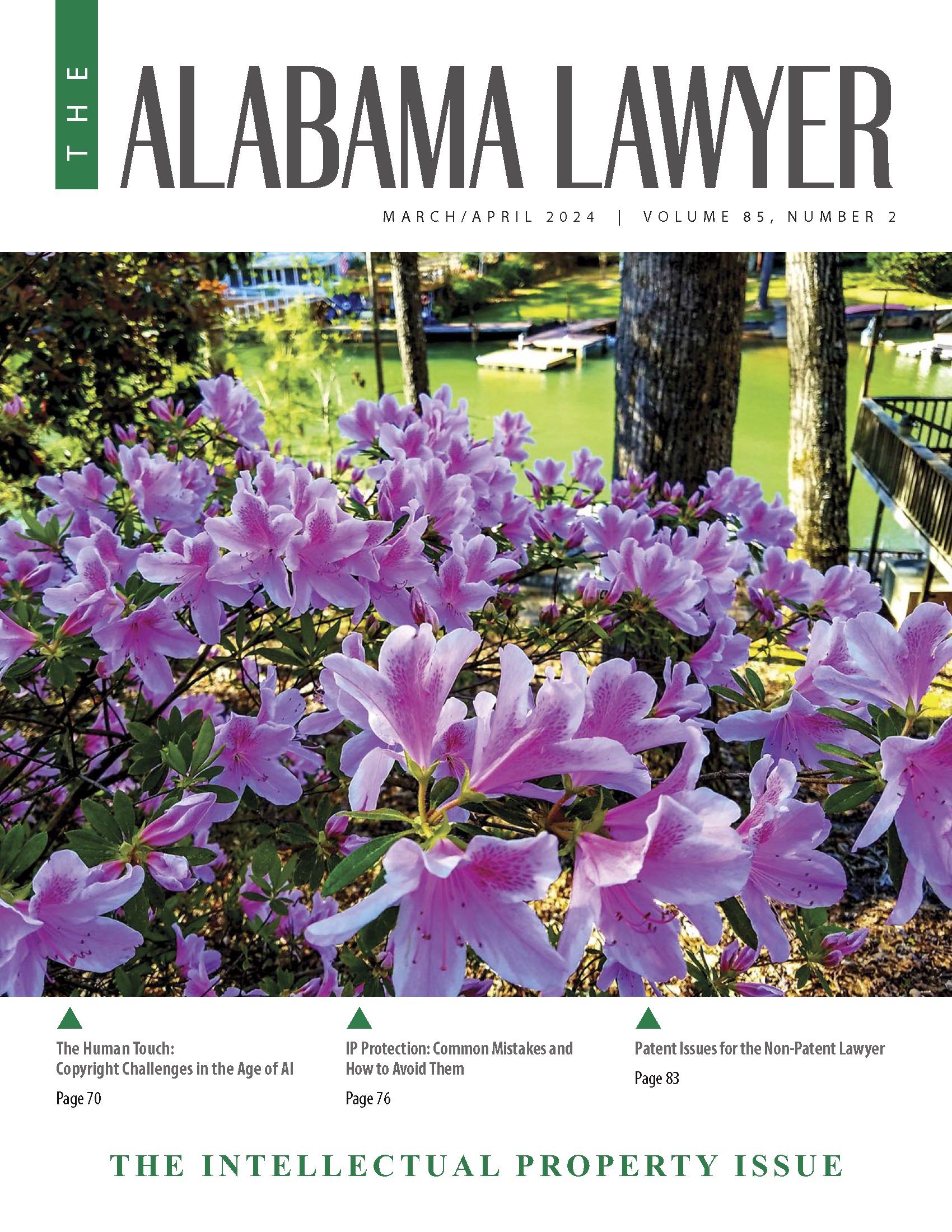
FROM THE ALABAMA LAWYER: The Human Touch: Copyright Challenges in the Age of AI

The subject matter protected by copyright generally, extends to literary works, music, dramatic works, pictorial and graphic works, sculptures, songs, and even architecture, just to name a few. The protection lasts for the life of the author plus 70 years for works created after January 1, 1978. What copyright protection does not protect are ideas, methods of operation, principles, and concepts, such as a scientific method or a recipe. There is also no copyright protection for names, titles, and slogans because they contain an insufficient amount of authorship. There lies one of the differences between copyright and trademark: Trademark protects words, phrases, and designs that identify goods and services.

Continue ReadingFROM THE ALABAMA LAWYER: The Human Touch: Copyright Challenges in the Age of AI